Kariba South Power Station
Overview
In 1955, a dam was constructed across the Zambezi River at the Kariba Gorge to provide power for both Zimbabwe and Zambia. Despite numerous challenges, including record-breaking floods, the Zambezi River was successfully dammed three years later, leading to the formation of Lake Kariba.
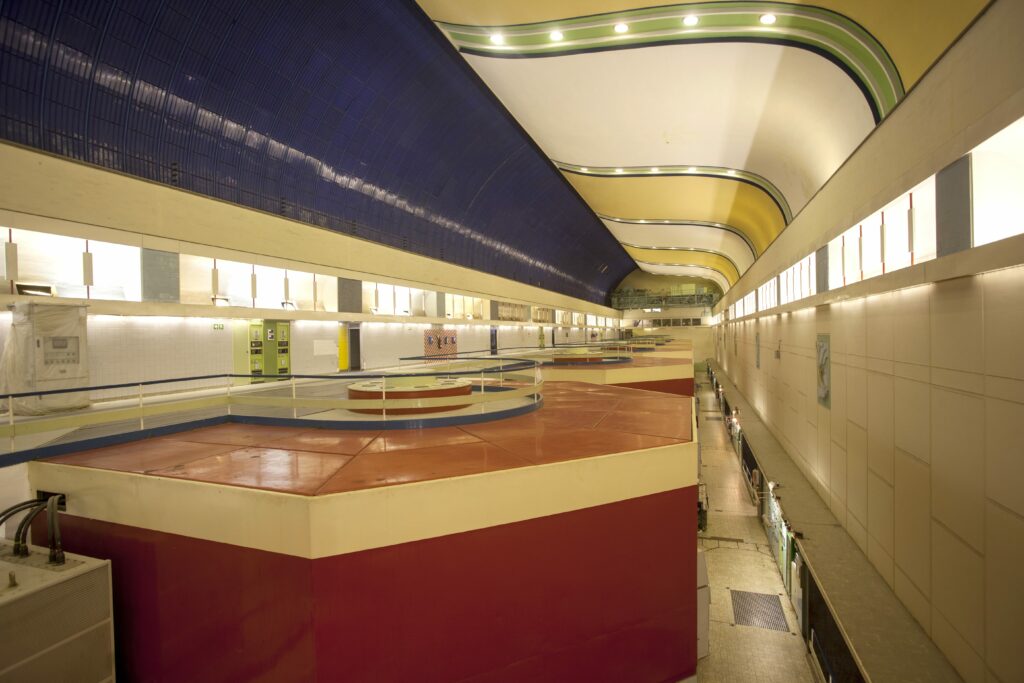
By 1956, engineers began excavating an enormous cavern located approximately 174 meters below ground to house a power station. In 1959, the first generator was commissioned, and by 1962, all six generators were operational, providing a total generation capacity of 666MW. The units were later upgraded to 125MW each, increasing the total installed capacity to 750MW.
In 2014, ZPC launched a project to expand the existing plant by adding two additional generating units with a combined capacity of 300MW. The expansion project was successfully completed and commissioned in March 2018, making Kariba South Power Station the largest hydroelectric power generation facility in Zimbabwe, with a total installed capacity of 1,050MW.
The total project cost was $533 million, comprising an EPC cost of $355 million and development costs amounting to $178 million. The development costs included consultancy and service fees, generation license fees, National Parks and Wildlife aggregate fees, Environmental Management Authority (EMA) fees, the sprucing of the existing power station (units 1 to 6), tools and equipment, as well as funding for the escrow accounts.
Work on the extension project, which was planned to last 40 months, officially commenced on 10 November 2014. On 24 December 2017, as scheduled, Unit 7 was connected to the national grid. By 27 February 2018, ahead of the scheduled 10 March deadline, Unit 8 was generating power. This was the first time in the region that a public project of this magnitude was completed on schedule and within budget.
As one of the key projects in the Infrastructure and Utilities Cluster under the Government’s economic blueprint, ZimAsset, the Kariba South Extension Project enjoyed tremendous support from the Government. A Project Steering Committee, chaired by the then Permanent Secretary in the Ministry of Energy and Power Development (MOEPD), Mr. P. Mbiriri, and comprising government departments, statutory bodies, and private sector players, was formed to address high-level challenges and manage stakeholder engagement for the project.
INTERESTING TECHNICAL STATISTICS ABOUT THE PROJECT:
A 3.8km network of tunnels, approximately 6.5m to 7.5m in diameter, was created through elaborate drilling and blasting for the purpose of conveying water for power generation and providing access to the new powerhouse (a cavern almost two-thirds the size of a football pitch) work area.
The drilling and blasting, which resulted in a combined 660,000m³ of earth and rock excavation, were carried out in a measured and deliberate manner due to the proximity of the Kariba dam wall.
The civil infrastructure, which includes the powerhouse and power generation and evacuation structures, consumed at least 100,000m³ of concrete (equivalent to at least 800,000 bags of cement). If a standard slab were to be laid using all this concrete along the route from Harare to Kariba, it would cover the road as far as Banket.
The fabrication and installation of generating infrastructure required 10,000 tonnes of steel. The two massive turbine-generator machines each generate 150MW at maximum capacity. To do so, they each discharge 188m³/s of water, which is equivalent to 188,000l/s.
The project provided immense value to the local economy. Approximately US$90 million, about 25% of the Engineering, Procurement, and Construction (EPC) cost, was spent on the local market through the procurement of construction materials such as cement, timber, river sand, and concrete stone.
The new power plant employed approximately 1,500 personnel at peak during construction, contributing about US$14 million in wages over the project period.
The Zambezi River Authority (ZRA), a statutory organisation established by the governments of Zimbabwe and Zambia, is responsible for managing the allocation of water used by Zimbabwe’s Kariba South Power Station and Zambia’s Kariba North Power Station.